
Chemical weapons from the Muammar Gaddafi era have been found in Libya and the new government has sought international help in securing them, National Transitional Council Prime Minister Mahmoud Jibril has said.
Ousted Libyan dictator Muammar Gaddafi, a maverick who had ruled the country with an iron hand for over four decades, was shot and killed by the rebels on Thursday in his hometown of Sirte after weeks of heavy fighting.
Backing transition plans of new Libyan authorities, world leaders have pledged support to them in areas such as Constitution-making, elections, human rights and economic recovery, amid United States President Barack Obama's assertion that NATO will continue to protect people there.
Camouflaged in Arab attire and carrying weapons similar to rebels, the SAS have been ordered to switch their focus on the search for Gaddafi, on the run since his fortified headquarters was captured on Tuesday, Telegraph reported quoting British Defence officials.
The body of Colonel Muammar Gaddafi will be buried on Tuesday in a "simple" ceremony at an unknown location in the desert, Libya's interim leaders have announced.
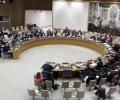
India, which has been at the forefront of the years-long efforts to reform the UNSC, began its two-year tenure at the Council on Friday last.
The Obama administration has formally recognised Libya's Transitional National Council, as the country's legitimate government, giving foes of Muammar Gaddafi a major financial and credibility boost.

'Frankly, India has no role to play.' 'This is a showdown between the US and NATO on one hand and Russia on the other.' 'That said, the outcome of this titanic struggle in Central Europe will remould the world order and affect India profoundly,' argues Ambassador M K Bhadrakumar.
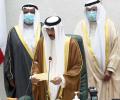
'Modi has visited all these three countries (the UAE more than once, inexplicably) but has left out Kuwait and Oman, the two Gulf countries that are closest to India in their political, cultural and civilisational ethos,' notes Ambassador M K Bhadrakumar.

Hundreds of thousands of people gathered at airports across the US to protest the ban announced by President Donald Trump on immigrants from seven Muslim-majority countries, extending solidarity to those affected as chaos and fear gripped individuals trying to enter the country.

The Geneva agreement is a signal, which at least Saudi Arabia and Israel are so reading, that normalisation of relations between US and Iran is not merely about the nuclear fuel cycle, says K C Singh.
 © 2026 Rediff.com - Advertise with us - Disclaimer - Privacy Policy - Sitemap - Feedback - About us - Terms of use - Grievances